A warehouse automation project needs different people at every stage, from design to go-live and beyond. Here is who you need, when you need them, and how to staff each phase without holding up the project.
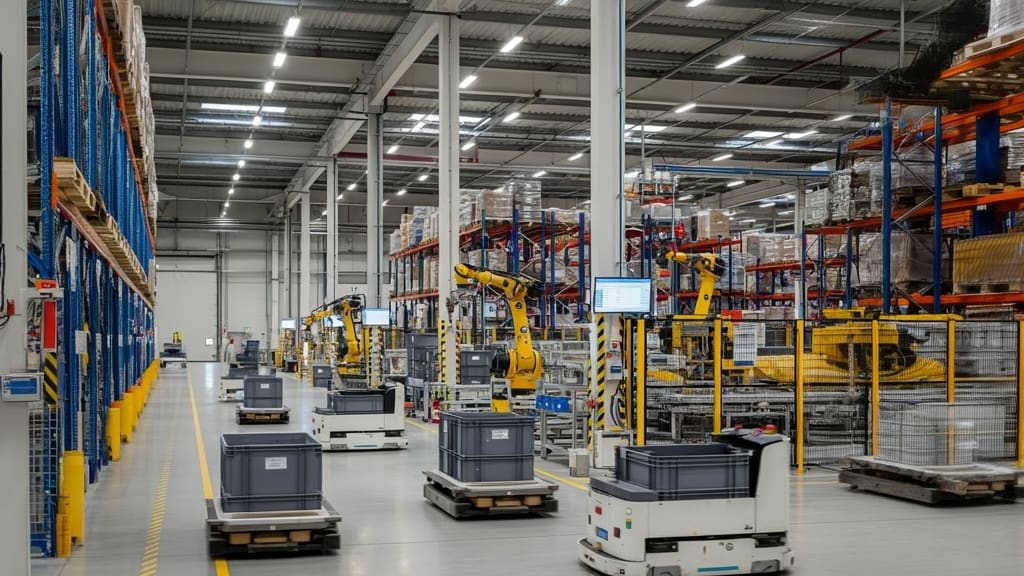
Automating a warehouse is one of the biggest projects a logistics operation will take on. Whether it is cube storage, a shuttle system, an automated storage and retrieval system, conveyors and sortation, mobile robots or robotic picking, the project moves through distinct phases, and each one needs different people.
Get the staffing right and the project runs to plan. Get it wrong and a missing engineer at the wrong moment can delay go-live by weeks. As a recruitment partner working in intralogistics and warehouse automation across the UK, this is how we think about staffing a project from start to finish.
Most warehouse automation projects involve two sides. The integrator or equipment supplier designs, builds, installs and commissions the system. The end user, the business that will run the warehouse, needs its own people to manage the project, connect the system to its IT and run the site afterwards. Both sides need to be staffed, and both often underestimate how early they need to start.
The project starts with understanding the operation: order profiles, throughput, storage needs and growth. The people involved are:
Once the design is agreed, the engineering team grows quickly. This is often where the first shortages appear.
On site, the project becomes a construction job. It needs:
Installation needs the most people for the shortest time, which is why it is usually staffed with contractors.
Commissioning is where the system comes to life, and where delays are most expensive. You will need:
Commissioning windows are fixed, and the engineers who can do this work are in demand everywhere. Book them early, and have contract cover lined up in case the programme moves.
Commissioning windows do not wait. The engineers who can deliver them are booked months ahead.
Go-live is not the end of the project. In the weeks that follow, the system is ramped up to full throughput while the integrator provides on-site support. The end user needs:
The most common mistake we see is hiring the maintenance team too late. Engineers who join during commissioning learn the system as it is built and are ready on day one. Engineers who join after go-live start out supporting a system they have never seen.
Most warehouse automation projects use all three. Permanent hires build long-term capability, especially for the people who will run the site. Contractors cover peaks such as installation and commissioning. A project team, assembled around the programme, can deliver a whole phase without adding permanent headcount. See the ways we partner to find the mix that fits your project.
We recruit across logistics and intralogistics, working with integrators, equipment makers and the businesses that run automated warehouses across the UK. Whether you need one engineer or a full project team, talk to us early in your project and we will help you plan the people as carefully as the equipment.
What roles are needed for a warehouse automation project? Design and simulation engineers, electrical design engineers, controls and PLC engineers, WCS and software engineers, installation teams, site managers, commissioning and test engineers, and, for the end user, operators, maintenance engineers and a system owner.
When should we hire maintenance engineers for an automated warehouse? Ideally during commissioning, so they learn the system as it is built and are ready to support it from go-live.
Should we use contractors or permanent staff? Usually both. Contractors suit short, intense phases such as installation and commissioning, while permanent staff build the long-term capability to run and improve the site.
