Automation is growing faster than the pool of engineers who can deliver it. These are the roles UK manufacturers, machine builders and integrators find hardest to fill, why they are so scarce, and what the businesses that hire well do differently.
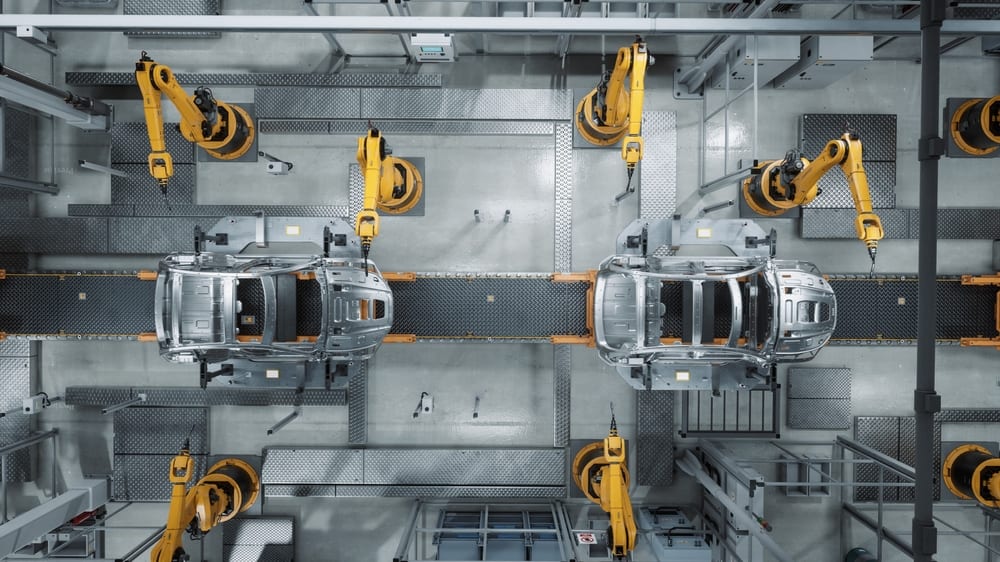
Across the UK, investment in automation keeps rising. Manufacturers are automating to cope with labour shortages and rising costs, warehouses are moving to automated storage and robotics, and integrators and machine builders are carrying full order books. In most of these projects the hardest part is not the technology. It is finding the people who can design, program, commission and support it.
As a recruitment partner that works only in automation and advanced engineering, we see where hiring stalls, again and again. These are the roles that UK engineering businesses find hardest to fill, and why.
Controls engineers are the most sought-after people in automation. Every automated line, cell and warehouse system depends on the PLC code, HMIs and networks they build, and a missing controls engineer can hold up commissioning on its own.
They are hard to find because employers rarely want "a controls engineer". They want someone who knows a particular platform, such as Siemens TIA Portal or Rockwell Studio 5000, has written code for a similar kind of machine or process, and has commissioned it on site. Many of the most experienced engineers have also moved into freelance work, where day rates reward exactly that combination.
Robot programming is a brand-specific skill. A programmer who is fast on FANUC is not automatically fast on ABB, KUKA or Yaskawa, and the application matters as much as the brand: welding, palletising, picking and machine tending each ask for different experience. Add vision systems and offline programming, and the pool of people who match a brief exactly becomes small.
Commissioning engineers bring a system to life on site. It is demanding work: long days, travel at home and abroad, and the pressure of a customer waiting to go live. The best commissioning engineers combine controls knowledge with mechanical and electrical fault finding and the people skills to work alongside a customer's team. Many choose contract work, so permanent commissioning roles are often slow to fill.
Behind every machine is an electrical design: schematics, panel layouts, cable schedules and component selection, usually drawn in EPLAN or a similar tool. Electrical design engineers who understand machinery standards such as BS EN 60204-1, and who can design for manufacture and for the people who will wire and maintain the panel, are in short supply across machine builders and integrators.
As machines and robot cells become more complex, so does keeping people safe around them. Engineers who can carry out machinery risk assessments, design safety systems, program safety PLCs and robot safety functions, and validate the result against standards such as BS EN ISO 13849, are a small and valuable group.
Modern automation runs on software as much as on hardware. Warehouse control and execution systems, SCADA, MES and the links between the factory floor and business IT need engineers who are comfortable both with code and with the physical equipment it controls. People who bridge software and automation are rare, and every sector is competing for them.
Once a system is live, someone has to keep it running. Field service engineers for equipment makers, and multi-skilled maintenance engineers who can fault find across PLCs, drives, robots and mechanical systems, are essential and increasingly hard to find. As automated sites multiply, so does the demand for people to support them.
Heads of controls, engineering managers and project managers who understand automation from the inside are some of the hardest people to hire. They usually come up through the technical roles above, so the shortage of engineers becomes a shortage of leaders a few years later.
The constraint on most automation projects is not the technology. It is the people who can deliver it.
In our experience, the engineering businesses that fill these roles reliably share a few habits:
We work only in automation and advanced engineering, across the UK. Whether you need a single controls engineer, contract cover for a commissioning window or a full project team, we can help you find people who are right for the work and right for your team. See how we partner with engineering businesses, the industries we work in, or talk to us about the roles you are struggling to fill.
Which automation roles are hardest to fill in the UK? Controls and PLC engineers, robot programmers, commissioning engineers, electrical design engineers, machinery safety specialists, software engineers for automated systems, field service engineers and engineering leaders are consistently the hardest roles to fill.
Why is it so hard to hire automation engineers? Demand has grown faster than training, experienced engineers are retiring or going freelance, and most employers need experience of a specific platform and application, which narrows the pool further.
How can we fill automation roles faster? Write a precise brief, move quickly through interviews, benchmark pay against the current market, use contract engineers to cover gaps, and work with a specialist recruitment partner who already knows where the right engineers are.
